Core Essentials: Four Basic Enclosure Cooling Techniques Explained
By: Kooltronic
Like most electronic equipment, the components contained within control cabinets and electrical panels generate heat. When these heat-producing components are packed closely together within the confined space of a sealed enclosure, it can create excessive temperatures (in some cases temperatures inside an enclosure can reach over 130°F). Only specialized electrical cabinet cooling equipment can protect sensitive components, prolong their lifespan, and help prevent lost revenue due to heat-related system failure.
Here are four basic enclosure cooling techniques explained.
Forced-Air Cooling
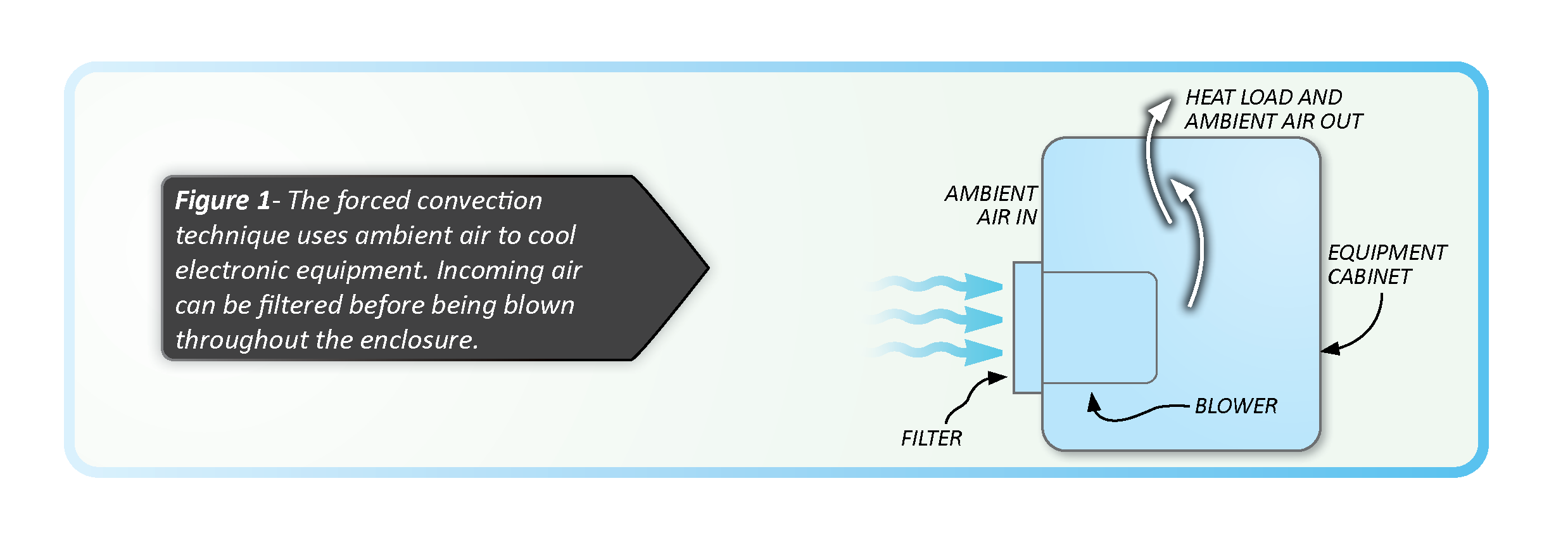
If the enclosure installation will be in a clean, non-hazardous atmosphere with an acceptable ambient temperature range, a simple forced-air cooling system (Fig. 1) utilizing standard blowers or fans (and possibly a low-cost air filter) will adequately meet the need for heat removal of typical electronic equipment.
Air-to-Air Heat Exchangers
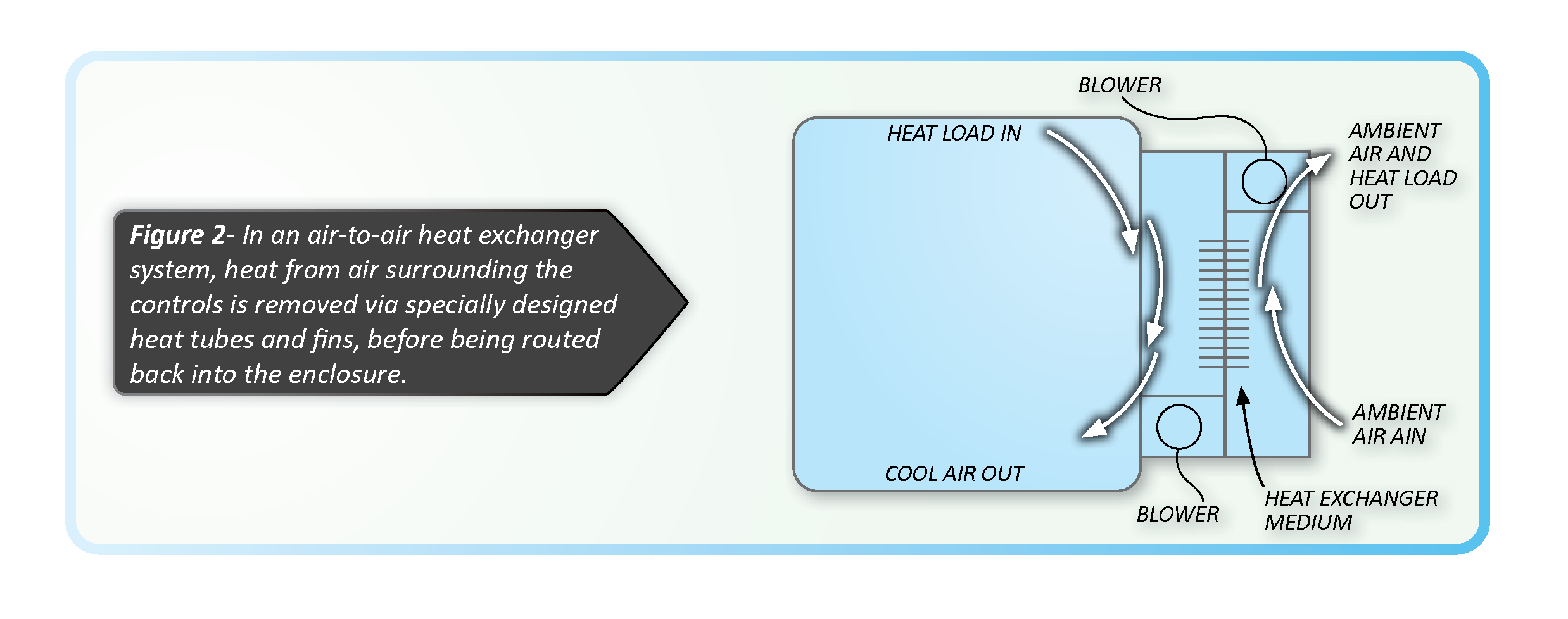
In the past, air-to-air heat exchangers were typically limited to applications where the peak ambient air temperature was below the maximum permitted in the electrical enclosure. As higher anticipated ambient temperatures were encountered, the size of the heat exchangers that were required to ensure adequate heat removal continued to grow. At a certain point, heat exchangers for some applications became impractical because of the size of the equipment needed to meet the cooling requirements. Over the years, heat exchanger design (Fig. 2) has greatly improved to allow for cooling capacities in small, compact units, giving the designer an economical answer to many cooling problems that previously could only be met using special-purpose air conditioners.
Water-to-Air Heat Exchangers
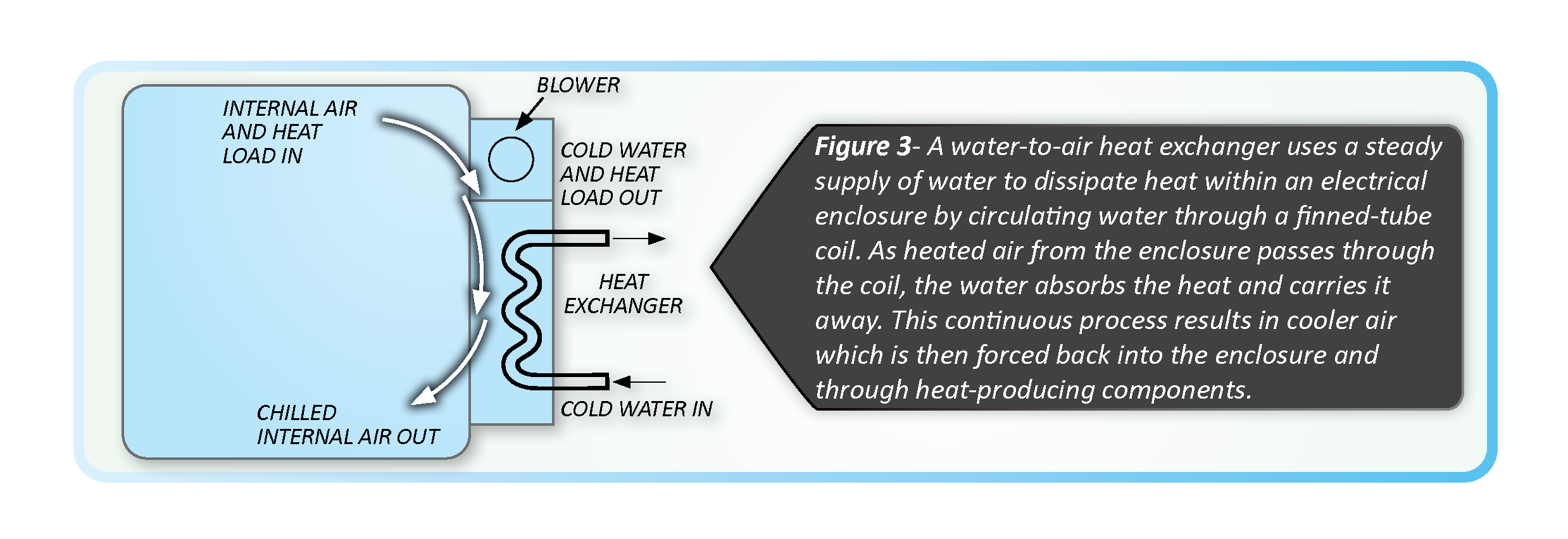
If ambient air cannot be utilized directly, water-to-air heat exchangers (Fig. 3) are an efficient cooling method that uses a water supply to remove heat from the closed-cycle cooling air circulated within the enclosure. Water-to-air systems are easy to install and typically only require periodic maintenance. The requirements for the water used are that it be reasonably clean and have a temperature low enough to ensure proper operation of the cooling system under the most severe anticipated conditions. In a water-to-air heat exchanger, the coil transfers heat between the water and air and provides a cooling air path which is augmented by natural convection; this also protects the electronics from possible water leakage from the coil. Cooling air is best introduced at the lowest point in the enclosure and returned to the cooling package from as high in the electrical enclosure as possible. Thus, air flow within the electronics proceeds from bottom to top, and it capitalizes on the buoyancy forces of natural convection and the momentum of the blower-induced air circulation.
Special-Purpose Air Conditioners
A closed-loop, special-purpose air conditioner maintains the optimal temperature within a sealed enclosure while keeping out warmer ambient air, humidity, dust, and other airborne contaminants. In a typical electrical cabinet air conditioner, heat is transferred from the components by circulating air around and through them. The air is then cooled, dehumidified, and returned to the enclosure without the admission of air from outside the enclosure. By circulating cool, clean air within an enclosure (and through heat-producing elements), closed-loop cooling systems help to protect sensitive electronic components and prolong their lifespan.
Kooltronic offers an extensive selection of enclosure cooling products in numerous sizes, capacities, and mounting configurations. To find the right solution for your application, try their free Enclosure Cooling Calculator or contact an enclosure cooling expert.