
What Gets Operationally Harder as AI-Ready Data Centers Scale
August 13, 2026
By Jason Agee, Director of Data Center Solutions and Architecture, Delta Electronics
In AI data centers running at 2+ megawatts per rack, the hardest aspect to get right is operations. That’s because extreme densities don’t just impose refinements on existing operating models; they break them.
The failure modes at this density just didn’t exist, or weren’t material, at fifteen kilowatts. Operations such as decision rights, workforce specialties, telemetry coverage, and commissioning rigor that worked at lower densities simply don’t scale in a straight line.
The data center industry has been good at identifying and solving technical challenges. For example, we debated for years whether liquid cooling was ready for 2 MW and greater rack densities. Today, we know the answer is yes. Vendors have products. Integrators have practice. Standards bodies have guidance.
But the industry has been slower to reckon with operational challenges.
What follows is a category-by-category account of what gets operationally harder as AI data center density scales, and why the difficulty isn’t always apparent until it looms very, very large.
Power Architecture Becomes a Capital Governance Problem
Topology decisions need to be made earlier in the program cycle than most operators are used to handling them, and with explicit sign-off from finance and risk management leadership, not just engineering.
At 500 kW per rack, topology decisions are engineering decisions. At 2 MW and above, they become long-tail capital governance decisions. Choosing 800 VDC, high-voltage direct current or AC hybrid architectures carries consequences for commissioning rigor, vendor qualification, standards compliance (NEC, NFPA, UL), and more. Each topology requires a different operational discipline to bring it up safely, different qualified vendors to maintain, and different compliance postures to satisfy building officials and insurers.
At scale, topology errors compound in ways they don’t at lower densities. A selection misjudgment at a 50 MW campus means commissioning delays, requalification costs, and stranded capital that was procured for the wrong architecture.
Cooling Infrastructure Becomes a Fixed Constraint
Liquid cooling loops, zone-two fluid networks, and heat-rejection infrastructure share a characteristic that air cooling does not: once deployed, they are largely immovable. Volumetric flow limits and pressure drop across coolant distribution units (CDUs) are hard engineering constraints that determine rack density ceilings.
And they are set during design time, not operations, which changes the operational calculus significantly.
At lower densities, an operator could absorb a cooling design shortfall through aisle containment adjustments, supplemental cooling units, or workload redistribution. At 2 MW per rack, those mitigations aren’t available. Operators need hydraulic modeling at the design stage, not the commissioning stage. And they need operations staff who understand the constraints well enough to avoid inadvertently exceeding them during routine capacity adjustments. Think of it this way: A hydraulic constraint that was tolerable at one configuration may be a hard ceiling at another, and the ceiling doesn’t move without significant civil and mechanical work.
Grid Coordination Becomes a Pacing Function
Grid awareness becomes a standing governance function, not a one-time design input.
Utility queue position, substation topology, and interconnect agreements are regulatory and commercial problems, and they operate on timelines that are foreign to data center programs. A campus that requires a new substation or a transmission-level interconnect may need up to five years of utility coordination before the first megawatt is available. That timeline doesn’t compress no matter how aggressive the AI deployment schedule may be.
At scale, the exposure compounds. A program incrementally deployed program may face interconnect limitations that are tolerable at phase one but become binding constraints at phase three. Operators who don’t model grid risk at the program (not site) level, will encounter each roadblock as a surprise. Surprises at interconnect scale are very expensive, indeed.
Commissioning Rigor Requires a Different Discipline
Standard commissioning practices fall apart in extreme densities. Unaware operators may clear their checklists but miss the failure modes the checklists weren’t designed to catch.
Standard test-and-measurement processes that work at 500 kW per rack do not translate to 2+ MW. At this density range, subsystems interact dynamically. Commissioning the electrical system without having the thermal system in play introduces load conditions that won’t match the operating state, and vice versa. This characteristic electrical-thermal coupling means you cannot treat commissioning as a sequential subsystem verification of power up and test, then cooling down and test.
Coupled-domain commissioning requires hold times at each load step, explicit acceptance criteria for the thermal-electrical interaction, and calibrated measurement instrumentation with documented uncertainty budgets. Calibration matters because at this density, measurement uncertainty is operationally significant: A two-percent error in power measurement translates to tens of kilowatts, which creates a serious operating blind spot.
The Supply Chain Becomes Program-Critical Infrastructure
Operators who treat supply chain as a procurement function, rather than a program governance function, will find it blocking their critical path when it’s too late to adjust. For hyperscalers, procurement governance must outpace deployment planning, sometimes by years.
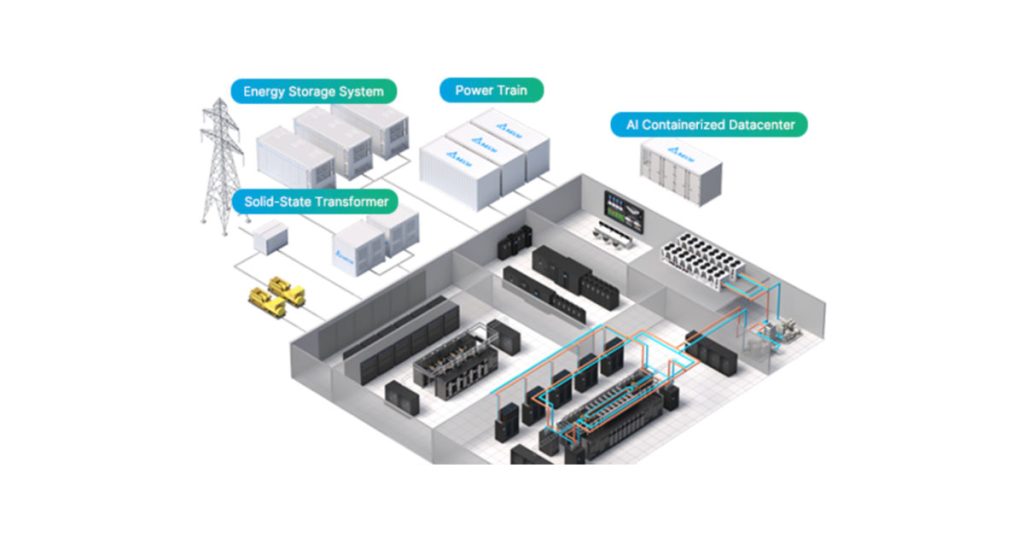
Solid-state transformers, battery energy storage systems, and high-voltage switchgear share a structural characteristic: long lead times relative to AI deployment schedules. Eighteen to thirty-six months is normal for certain high-voltage switchgear categories, and the supply chain for advanced transformer technologies is not deep.
Dealing with vendor qualifications compounds the timeline risk. Vendors that can supply the specified equipment may lack the field service capability to support commissioning and maintenance at the operator’s locations. Qualification at the equipment and service levels at level are different processes, and both require time rarely anticipated in the program schedule.
The NOC/MOC Model Breaks at AI Factory Density
Extreme density requires a coupled operating model with integrated awareness across power, cooling, and IT, with decision rights that are explicit and incident response that is near-instantaneous.
The handoffs between traditional network and mechanical operations work fine at lower densities because the subsystem time constants are long enough to accommodate sequential responses. Power events go to the electrical team. Cooling events go to the mechanical team. IT events go to the compute team. The domains are separate, but their handoffs are timely.
At 2+ MW per rack, however, electrical and thermal time constants overlap. A thermal event can produce an electrical consequence in seconds, not minutes. A power event can drive cooling to limits that the mechanical runbook doesn’t anticipate. Domain-sequential response is too slow, and domain-siloed runbooks don’t address cross-domain failure modes.
Legacy IAM Becomes a Compounding Risk at Global Scale
Treat identity and access management (IAM) architecture needs to be treated as critical infrastructure, with the same design rigor applied to segmentation, least-privilege enforcement, and regular access review as is applied to power and cooling redundancy.
IAM should be central to every data center operational risk discussion. Operators scaling AI infrastructure globally on legacy IAM frameworks—such as a single Active Directory domain and role assignments designed for a two-site portfolio that’s now stretched across twenty—are accumulating cybersecurity and operational risk that isn’t apparent in normal operations and can later appear in cascades.
The risk is structural. At lower portfolio scales, the exposure is manageable; at hyperscale density and global distribution, it isn’t. A compromised credential in a flat IAM architecture has access to infrastructure assets across the portfolio. A legacy access assignment from when the organization grew from five sites to fifty may grant change authority to individuals who shouldn’t have it.
The Operational Problem Is Institutional
Operational maturity requires institutional change, which is slow.
None of the challenges described above are purely technical. Power governance, grid coordination, commissioning discipline, supply chain maturity, coupled-domain operations, and IAM architecture are all institutional issues that require institutional responses. These responses must precede deployment, not follow it.
The industry has been good at identifying the technical challenges of 2+ MW density but not the institutional ones. The operators who close that gap quickly will deploy faster, operate more reliably, and compound their advantage across operating cycles. The operators who don’t will encounter institutional limits when facilities are already in the ground, which is the worst possible time to discover them.

https://datacentredigest.com/what-gets-operationally-harder-as-ai-ready-data-centers-scale/