
Rethinking Power Delivery for AI-Scale Data Centers
August 13, 2026
By Sasha Ishmael, Principal Engineer, Technology and Industry Solutions, VEIR
The data center industry is attempting to scale AI infrastructure with power delivery architectures designed for a fundamentally different era of compute density.
AI workloads are accelerating demand for larger campuses, higher rack densities, faster deployment timelines, and increasingly complex electrical and thermal infrastructure. Yet much of today’s power delivery architecture was developed around assumptions that are now being strained by the scale and concentration of modern AI compute.
Data centers increasingly underpin critical sectors ranging from advanced manufacturing to AI training and inference. But while computing performance has accelerated dramatically, the infrastructure supporting these environments was not designed for today’s scale, density, and power requirements.

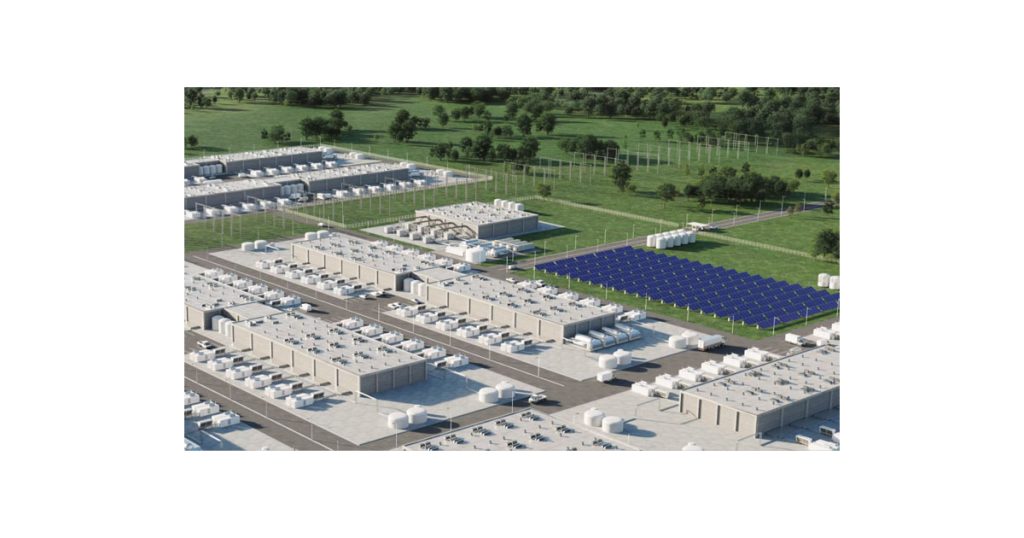
As AI drives higher energy demand, data centers require more power, more cooling, more space, as well as the necessary mechanical and thermal support systems for this infrastructure. Hyperscale and AI-focused campuses are now being designed for hundreds of megawatts and are quickly moving toward gigawatt scale.
While utility interconnection constraints remain a major challenge, the bottleneck is no longer only about access to generation. Delivering power efficiently throughout increasingly dense AI campuses is becoming a defining infrastructure challenge in itself.
What were once secondary infrastructure considerations are now becoming primary design constraints. These include:
- Conductor footprint and routing limitations
- Permitting and right-of-way complexities
- Thermal losses and cooling requirements
- Construction timelines tied to copper-intensive builds
- Rising material and labor costs
The industry risks treating AI infrastructure primarily as a compute scaling challenge when it is increasingly shaped by multi-layered infrastructure constraints – including power distribution.
Incremental adaptation remains possible, but the strain on conventional approaches is becoming increasingly visible as AI infrastructure scales toward hundreds of megawatts and eventually gigawatt-class campuses. The industry may need to rethink not only how much power can be generated, but how power is architected and delivered throughout the data center environment.
Addressing these pressures may require moving beyond a component-level view of electrical infrastructure. Too often, emerging power delivery technologies are evaluated as simple replacements for conventional cables or busbars. That framing may miss the broader architectural opportunity. The real value increasingly emerges at the system level. At certain performance thresholds, simply optimizing legacy infrastructure becomes less effective than rethinking the architecture.
As AI racks move toward multi-megawatt densities and original equipment manufacturers (OEMs) begin signaling a transition to higher-voltage direct-current (DC) architectures, the assumptions underlying internal power distribution begin to change. Resistance becomes more consequential. Routing space becomes tighter. Thermal management becomes more complex. Power losses become more substantial.
The result is infrastructure that is already aging out of relevance before it is fully deployed – a growing structural mismatch between traditional design assumptions and operational realities emerging within AI-scale environments.
High-temperature superconducting (HTS) power delivery systems offer one potential pathway toward addressing these challenges. Rather than functioning simply as substitutes for conventional conductors, HTS power delivery infrastructure may enable new approaches to power distribution across dense, high-growth compute environments where space constraints, efficiency requirements, and deployment scalability increasingly intersect. Designed to meet the growing demands of reliability, power density, and efficiency, they can help data centers deliver more power without requiring more space.
Why High-Temperature Superconductors Matter Now
High-temperature superconductors, or simply superconductors, are not an emerging scientific discovery. Superconducting technologies have supported major commercial sectors for decades, while continued advances in HTS materials are helping expand their relevance for modern power infrastructure.
What has historically been missing is not scientific credibility, but the combination of infrastructure urgency, deployment scale, and market conditions capable of driving broader adoption.
For many years, broad adoption remained constrained by cost uncertainty, manufacturing scale, and supply chain maturity. AI infrastructure growth is beginning to change that equation by increasing the operational value of compact, high-capacity power delivery systems. Additionally, recent advances in HTS material quality and availability, manufacturing scale, and supply chain diversification – combined with growing policy momentum around grid resilience and advanced conductors – are shifting the adoption landscape.
For AI-scale data centers, superconducting power delivery systems offer several important system-level advantages:
- Power density. Multi-kiloampere current delivery enables single-cable, multi-megawatt power transfer – demonstrated at 3 MVA through a single 480V cable – within a footprint more than 10x smaller than conventional copper equivalents, alleviating routing congestion and conductor scaling challenges.
- Near zero-resistance operation. Minimizing voltage drop and system losses becomes increasingly valuable as facilities move toward higher-current and higher-voltage DC- architectures.
- Deployment leverage. Simplifying the physical complexity of power distribution infrastructure may help shorten deployment timelines and improve integration flexibility between substations, on-site behind the meter (BTM) generation and rapidly expanding compute environments.
The significance of these capabilities is not simply about improving conductor performance. It is about enabling infrastructure architectures purpose-built to scale alongside the emerging demands of a new era of compute.
Rethinking Power Delivery Across the AI Campus
One of the most significant infrastructure challenges emerging in AI-scale environments is how power is architected and distributed across increasingly dense and rapidly expanding campuses.
As campuses scale toward hundreds of megawatts, and increasingly toward gigawatt- class infrastructure, conventional power distribution approaches become increasingly difficult to expand efficiently across the full campus environment. Power delivery infrastructure scale increases. Routing corridors grow more congested. Thermal management requirements intensify. Physical power infrastructure increasingly competes with compute capacity, cooling systems, and operational flexibility for valuable campus space.
In this environment, high-capacity superconducting power delivery systems may offer advantages that extend beyond electrical efficiency alone. Consolidating multi-megawatt transfer into a significantly reduced physical footprint has the potential to:
- Reduce duct bank footprint and routing space requirements
- Lower electrical losses across longer transfer distances
- Improve flexibility in campus design and expansion planning
- Simplify certain aspects of deployment and infrastructure integration
- Support future scaling toward increasingly dense AI infrastructure environments
Rather than viewing this transition simply as the replacement of one conductor technology with another, this inflection point creates an opportunity to reconsider how power is architected and distributed across AI-scale campuses.
Deployment speed, spatial efficiency, thermal complexity, and long-term scalability are becoming increasingly interconnected design variables in AI-scale infrastructure design.
At certain performance thresholds, infrastructure may need to be designed around a new set of assumptions rather than continuously optimized within the constraints of legacy approaches.
The AI Era Demands Infrastructure Innovation
AI infrastructure growth is structural. Training models are scaling. Inference is moving closer to the end user. Compute density per rack continues to rise. Power architecture is shifting. Voltage levels are increasing. Data center campus footprints are expanding horizontally and vertically. Rack power densities that once seemed exceptional are increasingly becoming part of mainstream infrastructure planning assumptions.

Each of these trends puts new pressure on power delivery systems. Power delivery systems are becoming increasingly central to how reliable and efficient AI infrastructure is planned, deployed, and integrated as dynamic additions within broader grid and energy ecosystems.
In these environments, high-capacity superconducting power delivery systems may help compress deployment timelines, support higher facility power densities, reduce electrical losses, and enable the transition toward increasingly DC-oriented power architectures.
As campuses continue scaling, these considerations are becoming less about isolated efficiency gains and more about enabling infrastructure environments capable of supporting future infrastructure growth within increasingly constrained physical and operational boundaries. The infrastructure planning decisions made today will shape which campuses can actually scale to meet the next generation of AI compute demand. Operators who continue optimizing within legacy architecture assumptions may find those assumptions have already shifted beneath them. Superconducting power delivery infrastructure doesn’t just improve the economics of the current model – it enables a different one.